The Complete Lawn Seeding Guide: Prep, Seed, Water and Establish
Quick Summary
In short: a successful lawn seeding project comes down to four things — thorough site prep, certified seed, stabilization, and a disciplined watering schedule. Tall fescue germinates in 14–21 days, gets its first mow at 4–6″, and needs consistent moisture for the first 6–8 weeks.
As we enter September, the prime window for planting and seeding has arrived. This guide outlines all of the steps to a successful lawn seeding project, from site preparation through establishment, for properties across North Wilmington, Greenville, Chadds Ford and the surrounding areas.
Step 1: Site Prep and Premium Topsoil
The first step is preparation, which includes removing any existing vegetation or debris. It is crucial that all roots of active vegetation, along with old tree roots and stumps, are removed to prevent future settlement or competition.
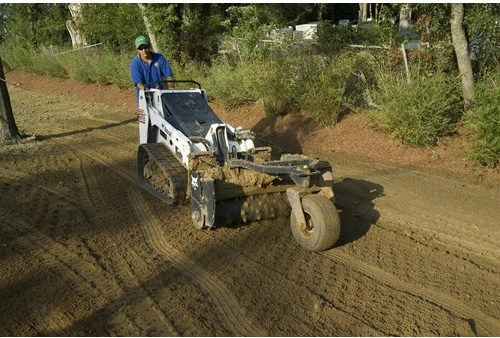
The next step is to prepare the subsoil. This involves pulverizing and loosening the top few inches of existing soil so the new turf roots can take hold easily and deeply in the new soil. We complete this step using a hydraulic soil conditioner that attaches to our skid steer.
Grading for Proper Drainage
The final step of preparation is grading and amending the soil. We grade the area to ensure water is flowing properly away from structures and is not pooling. This step is crucial to protecting structures and to the long-term success of the lawn, as standing water can lead to erosion and root rot. On properties with existing water problems, this is where our drainage and grading work comes in before any seed goes down.
Amending With Screened Topsoil
Lastly, we amend the soil using our premium screened and enriched topsoil. This soil mix was expertly curated and carefully selected by us. Not all topsoil is created equally — it’s crucial to source the right material and review soil testing to ensure it will work for seeding or planting. This certified soil comes with all the right amendments for seed, sod, and plants to thrive. We spread 1″–2″ over the area to prepare for seed.
Step 2: Seed Selection and Stabilization
We use only blue tag certified 99% real tall fescue seed, and we also carry a specialized dense shade mix for shaded areas. For properties with a filtered exposure, we mix the two seeds together for the best results.
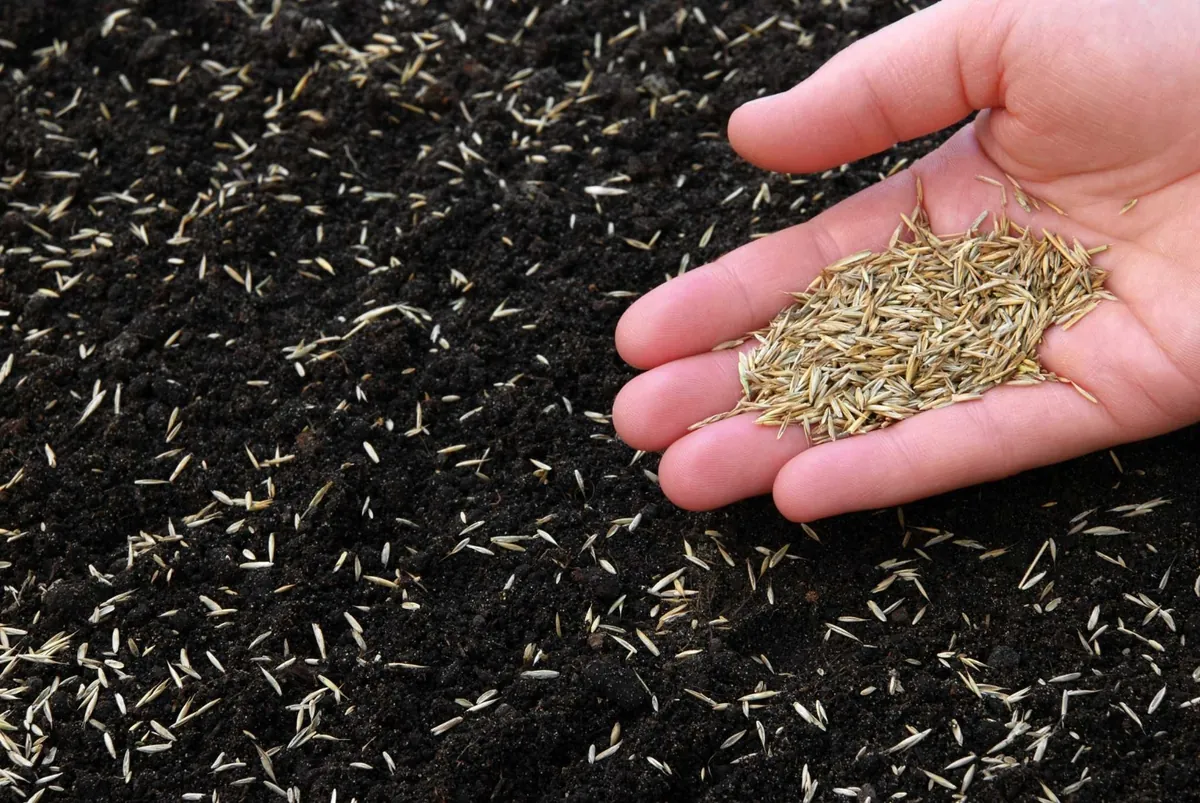
We carefully hand or broadcast spread the seed into the soil, then lightly rake it into the topsoil base. Raking it into the soil ensures proper contact and helps retain moisture.
After seeding, stabilization is the next crucial step. For large areas, we use biodegradable straw netting secured with staples. This mesh stabilizes the area, preventing washout from rain or disturbance by animals while the seed germinates. The germination period is typically 14–21 days. The biodegradable mesh is preferred because it breaks down over time as the seed grows in. Many contractors opt for cheaper plastic mesh, which leads to a lifetime headache.
Step 3: Watering a Newly Seeded Lawn
Now that your lawn has been expertly prepped, seeded, and stabilized, it’s time to talk about watering. This step is key to nurturing your lawn until it’s fully established. With some attention to detail and effort, your lawn will be lush, green, and weed free in no time. At Arborvine, we offer a sprinkler and timer setup service for clients who do not have permanent irrigation or do not want to water manually.
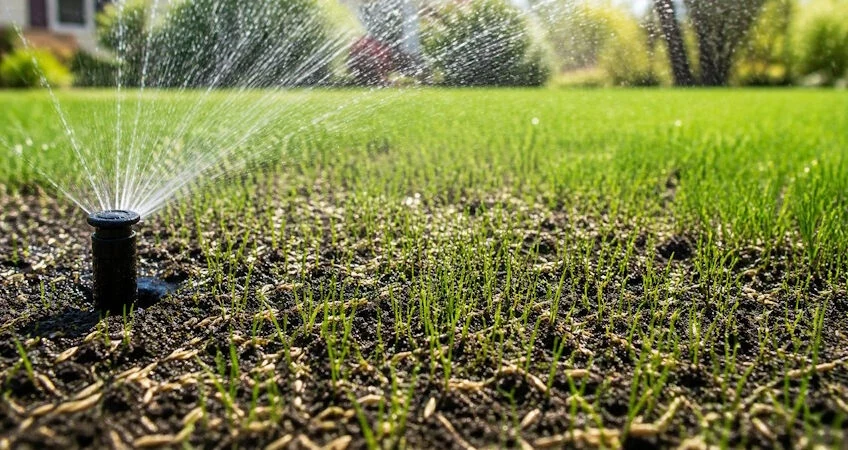
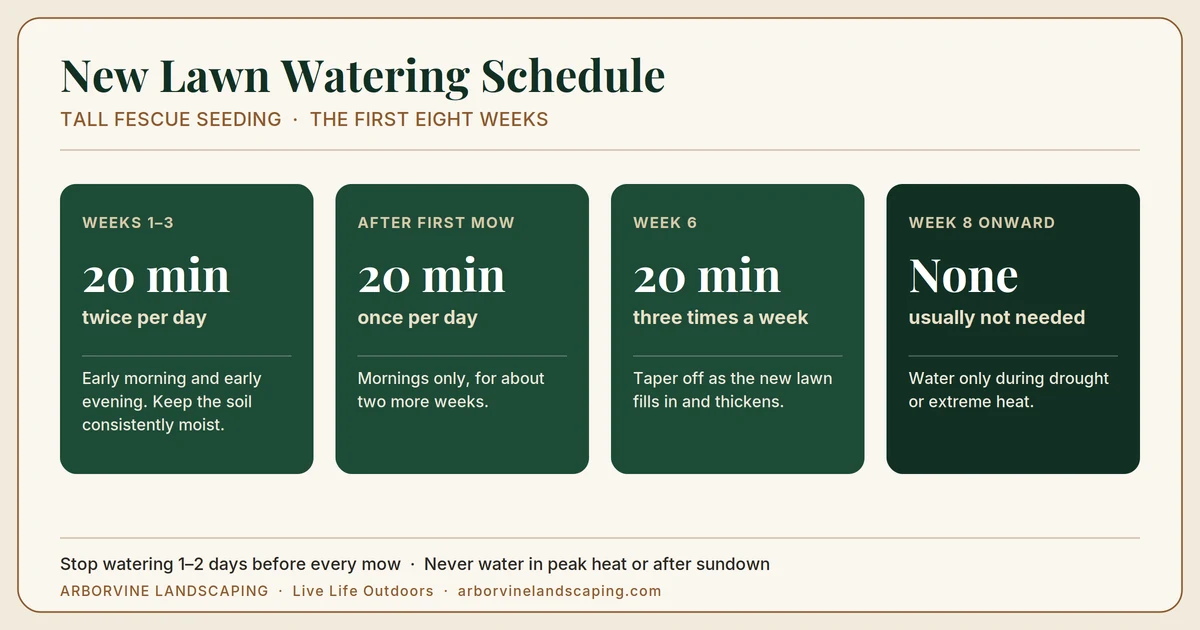
The soil must be kept moist for the seeds to germinate. For the first 2–3 weeks, water the lawn for 20 minutes twice per day, in the early morning and early evening. Watering in peak heat or after sundown is not recommended. Watering too late at night contributes to insects and disease, and watering in peak heat causes the water to evaporate quickly, starving the roots of hydration. Continue watering once a day until a few days before the first cut.
Step 4: The First Mow
Do not mow wet grass. Once the grass reaches 4–6″, it is time for the first mow. Be sure to stop watering 1–2 days before the first cut, and confirm there has been no measurable rainfall. A push mower should be used for the first few cuts so the tender seedlings and damp soil are not disturbed.
Clippings should be mulched during the first cut to redistribute the nutrients back into the lawn. If the lawn is thick and there are visible clumps, disperse them with a leaf blower, or mow again with a bag to collect excess clippings. It’s crucial to water at the next appropriate time following the first cut. After the first mow, reduce the watering schedule to 20 minutes once per day in the morning for another two weeks, again stopping 1–2 days before scheduled mowings. Mowings should continue weekly or bi-weekly, depending on the growth rate of the new grass.
Step 5: Overseeding Bare Areas
After the first or second mow, you may notice a few bare or patchy areas. This is totally normal. These areas should be overseeded using the same seed mix to help thicken them for a lawn that is fully thick and lush. Try to seed immediately after a mow to provide ample time for the new seed to begin germination before the next mow.
Avoid unnecessary mowings, especially when the lawn is new. If the lawn is wet, growing slowly, or if we are in drought conditions, avoid mowing, as this places unnecessary stress on the turf and can lead to bare areas and weeds taking over where turf is struggling.
Step 6: Scaling Back Water and Long-Term Care
After about 6 weeks, watering can be further reduced to 20 minutes three times per week. By week 8, watering should not be required unless drought conditions or extreme heat arrive. During the fall, periodically remove leaves that fall onto the lawn to ensure sunlight is able to reach the new seedlings.
A key step to your dream lawn is regular overseeding. If your lawn is seeded in late summer or early fall, an additional 1–2 overseedings in late fall, followed by one the next spring, will help your lawn thrive. Even as the lawn matures, overseeding every 1–2 years will help choke out weeds and revive the lawn from summer stress. For clients who would rather hand this off entirely, we fold it into our integrated property maintenance program.
Weed Control and Fertilization
Once your lawn is established, about six months to one year after germination, we recommend a weed control and fertilization program for clients who want to keep the lawn pristine, healthy and weed free. These programs treat weeds throughout the growing season, strengthen roots, and prevent insects from disturbing the turf. For families with pets and children, or anyone who is more conscious of the environment, organic treatment plans are available to keep your lawn healthy and your family safe.
Seed or Sod: Which Is Right for Your Lawn?
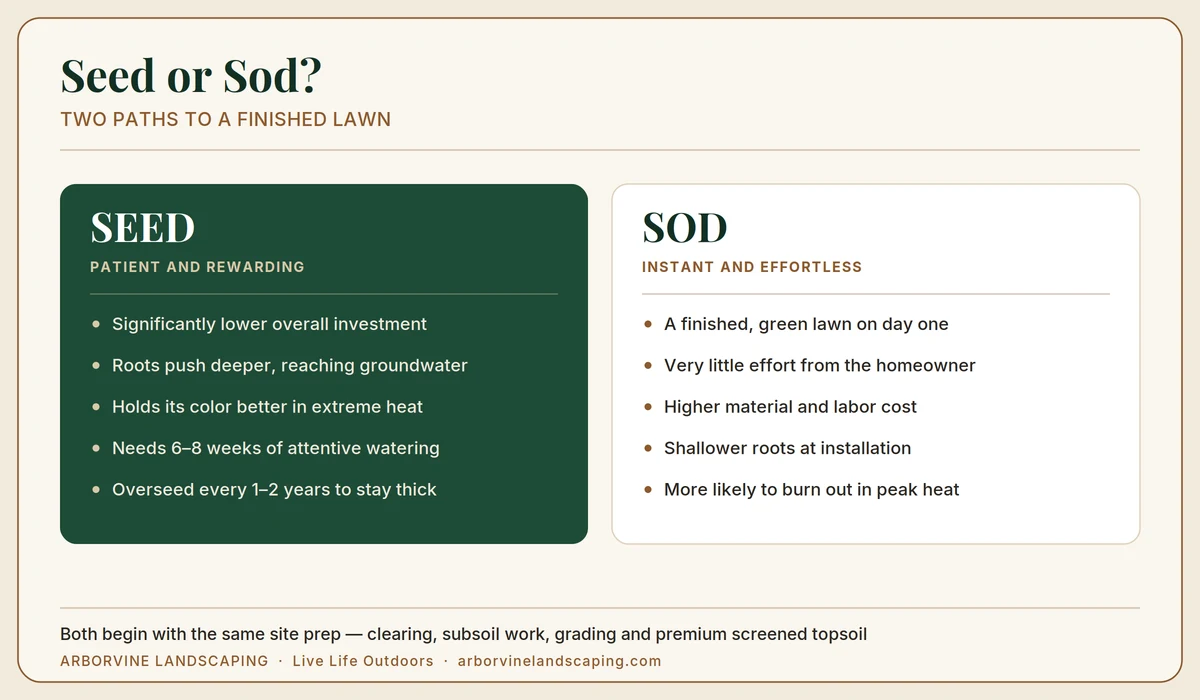
While seed can be much harder to grow from scratch than sod, there are many benefits to consider. Seeding a lawn is significantly cheaper than sodding — less labor and material cost leads to a lower overall investment. Seed also handles extreme heat better than sod, because it tends to push roots deeper than sod, which was partially established at installation. These deeper roots allow seed to source deeper groundwater, helping your lawn stay green when sod starts to burn out.
If you want an instant result that requires little to no effort, sod may be for you. However, if you are patient and willing to help nurture your lawn to perfection, seed is a great option to consider. With the right preparation, premium materials, and a dedicated homeowner, together we can establish your dream lawn.
Seeding is often one piece of a larger property plan. If you’re considering a new lawn alongside luxurious landscapes or a full property transformation, schedule a consultation and we’ll build the plan around your site.
Frequently Asked Questions
When is the best time to seed a lawn?
Late summer into early fall is the prime window for planting and seeding. Seeding in September allows time for germination and establishment, and sets the lawn up for 1–2 additional overseedings in late fall plus one the following spring.
How long does grass seed take to germinate?
The germination period is typically 14–21 days. Keeping the soil consistently moist throughout this window is essential.
How often should I water a newly seeded lawn?
For the first 2–3 weeks, water for 20 minutes twice per day, in the early morning and early evening. After the first mow, reduce to 20 minutes once per day for two weeks. After about 6 weeks, reduce to 20 minutes three times per week, and by week 8 watering generally is not required unless there is drought or extreme heat.
When can I mow a new lawn for the first time?
Once the grass reaches 4–6″. Stop watering 1–2 days before the cut, make sure there has been no measurable rainfall, never mow wet grass, and use a push mower for the first few cuts.
Is seed or sod better for a new lawn?
Seed costs significantly less and tends to root deeper, which helps it handle extreme heat better than sod. Sod gives an instant result with little effort. Seed is the better choice if you’re willing to nurture the lawn through establishment.
FAQs
Your questions, answered.

Testimonials
-
We are so pleased with the outcome of our project, particularly the hardscaping. It is so much better than I ever envisioned. I let them know what I was thinking and from that, they were able to make this happen. We get compliments all the time from neighbors and people just passing through. I can’t say enough good things about the men who were here doing the work. They were respectful, hard-working & took the time to get the wall just right even though it was during a heat wave. Greg has put together a great team! He was also incredibly kind & patient, more so than we could have hoped for.
Angela HopkinsWilmington, DE -
Crew H-1, L-2 and all the Arborvine team members have worked incredibly hard, starting before 8am and usually working past 5:30pm. The new landscaping looks great and the front walk and patio restoration are impressive.
Steve BienerWilmington, DE -
We had Arborvine remove overgrown bushes and plant smaller ones. They worked quickly and efficiently. We appreciate their professionalism.
Nicole MacturkNewark, DE -
Greg was extremely prompt with all communications and gave us a great plan for our new flower beds. The team completed the job right on schedule – we love the new look!
Lou CamarattaWilmington, DE -
Best landscaper I’ve ever used. Excellent and creative design work; began the project on time; finished on schedule. Was responsive throughout and accommodated last-minute change requests. Very professional, with high standards of excellence.
Dan KingGarnet Valley, PA -
Great company, we have been using them for a few years now on a few different projects along with your typical mulching and yard clean ups. The owner Greg was very easy to work with and the office staff is great. On our most recent project we had the pleasure of working with the foreman by the name of Alex who was great and took great pride in his work. We would definitely recommend them to anyone looking for a landscaping company in the future.
Richard LubickyWilmington, DE -
Love the workmanship, professionalism , design, and outcome of our outdoor project. Always on time, friendly, beautiful workmanship, cleaned up every day and on final day. Would highly recommend Arborvine for anyone. Thank you for an amazing outcome!
Karen RockwellSpringfield, PA -
We had a wonderful experience working with Arborvine Landscaping, and I can’t say enough good things about their team. Kathy, Angel, and Angel were absolutely wonderful, each professional, kind, and knowledgeable.
Kathy was very responsive and thoughtful, helping navigate design choices with ease and always keeping our vision and budget in mind. Angel and Angel (yes, two Angels—and they truly lived up to the name!) were meticulous, hardworking, and respectful of our space.
Our yard has been completely transformed, and we couldn’t be happier.
Brooke WileyWilmington, DE -
The whole team was professional, thorough, communicative, and did great work. No complaints.
John CohnWilmington, DE -
Punctual, professional, quick and thorough. Greg was great to work with and Angel and crew did a fantastic job. Would recommend Arborvine for any landscaping project!
Abby HughesWilmington, DE