Summer Watering: Helping Your Landscape Thrive Through the Heat
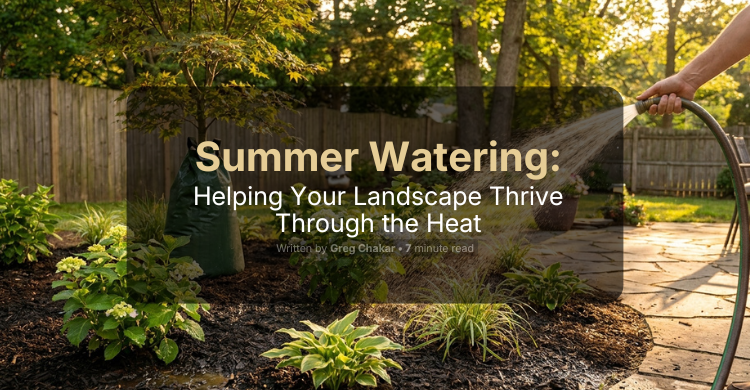
As we enter July, the peak of summer is arriving and this heat can wreak havoc on a young landscape. Here are some tips to help your landscape thrive through the summer heat!
Quick Summary
- Water new plants deeply every other day for the first 2–3 weeks, then as needed.
- Water at the base, early morning or a few hours before sundown – never in peak heat or late at night.
- Check soil moisture with your finger before watering.
- Native plants and drip irrigation reduce long-term stress.
Understanding Plant Growing Cycles
This is what we call the 3 year cycle. In year one, the plants are getting acclimated to their new environment. New exposure, new soils, new neighbors. Plants will spend the first year focusing their energy on survival and adaptation as they get used to their new home. Remember, new plants are dug from the grower, potted and transported to us to be installed at your home. This is a lot for a new plant to endure!
Year two is where the plants really start to get comfortable in new surroundings. During this time they focus their energy on pushing out new roots, deeper and wider, anchoring themselves into their permanent home. This process, while not visible to us, sets the stage for the excitement to come. Proper watering and fertilization are integral to the plants at this stage.
Year three is when the waiting and the work starts to pay off. You will see denser foliage, more profuse blooms and moderate growth as the plants start to fill out their space! This growth is a result of the previous year’s spent strengthening and acclimating to their new environment.
During this entire process, proper care and watering is a crucial step to ensuring that your plants flourish and are properly nourished throughout the growth cycle.
While watering is a very frequent task immediately after installation, ongoing watering within the 3 year cycle and beyond is a key to long term success.
How often should I water plants in the summer?
At Arborvine, we provide detailed care instructions for everything we install including watering instructions for plants. These instructions outline how to water, when to water and how to tell if your plants need more or less water. Smaller plants such as perennials are naturally more sensitive to heat, especially when newly installed, and they benefit from close attention in their first season. Larger trees and shrubs are much more durable, but do require more water to survive.
Oftentimes, in the summer our area can be placed in a drought watch (as we are currently in July of 2026). Watering properly is not only beneficial to your plants, but it helps to conserve water too!
General Watering Instructions
Follow these steps to water your new plantings correctly through the first few weeks and beyond:
-
Start with our deep initial watering. All plantings are installed with a premium starter fertilizer, and our crews perform the first deep watering — saturating the root area thoroughly. If the crew is unable to complete it, we’ll notify you to perform a deep watering the same day the plants are installed.
-
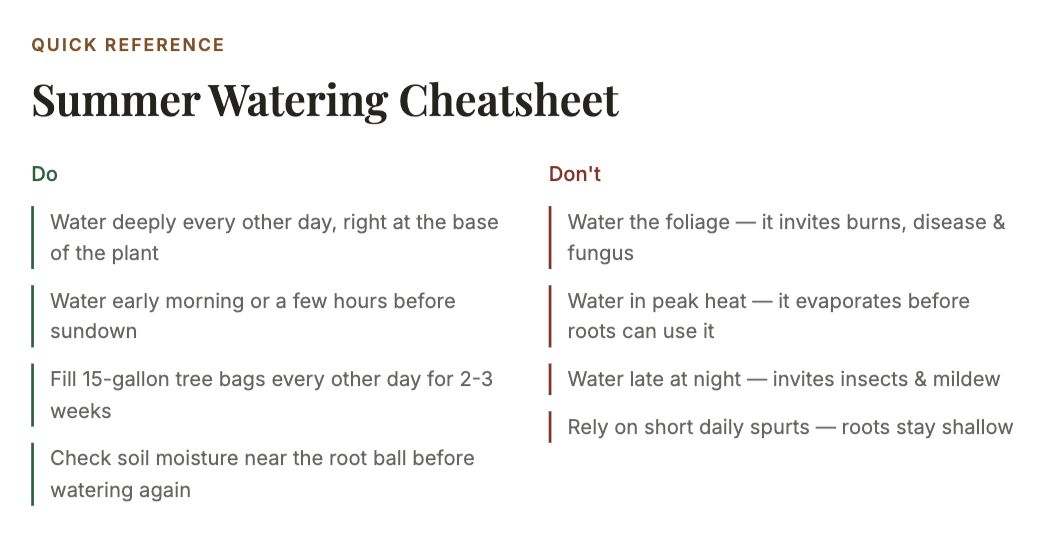
Water deeply, every other day. For deep watering, every-other-day is recommended. Roots search for deeper water when you water this way; daily short spurts keep roots shallow at the surface.
-
Always water at the base of the plant. Watering the foliage leads to burns, disease, and fungus that can spread and kill tender plants.
-
Time it right — early morning or a few hours before sundown. Avoid watering in peak heat (water evaporates before it hydrates the plant) and avoid watering too late at night (encourages insects and mildew).
-
Follow this schedule for the first 2–3 weeks, then water as needed. After the establishment window, water on an as-needed basis, paying special attention to extreme heat, prolonged dry weather, and signs of stress — wilt, leaf drop, yellowing, or excessively dry soil.
-
Give trees and shrubs extra attention. They have higher water requirements while establishing, so plan to spend more time watering them.
-
Use the watering bags on larger trees. Larger trees are equipped with 15-gallon watering bags. Fill them every other day for the first 2–3 weeks, then as needed. The bags deliver the right amount of water and cut down on manual watering time.
-
Remove watering bags before winter.
How do I know if my plants need water?
The best way to check that your plants are receiving the appropriate amount of water within the first few weeks is by simply pulling away the mulch from a small area near the base of the plant. Stick your finger in the soil & if it is damp/moist then you do not need to water. If the soil feels dry, you should water at the next available appropriate time.
What do Overwatered vs. underwatered plants look like?
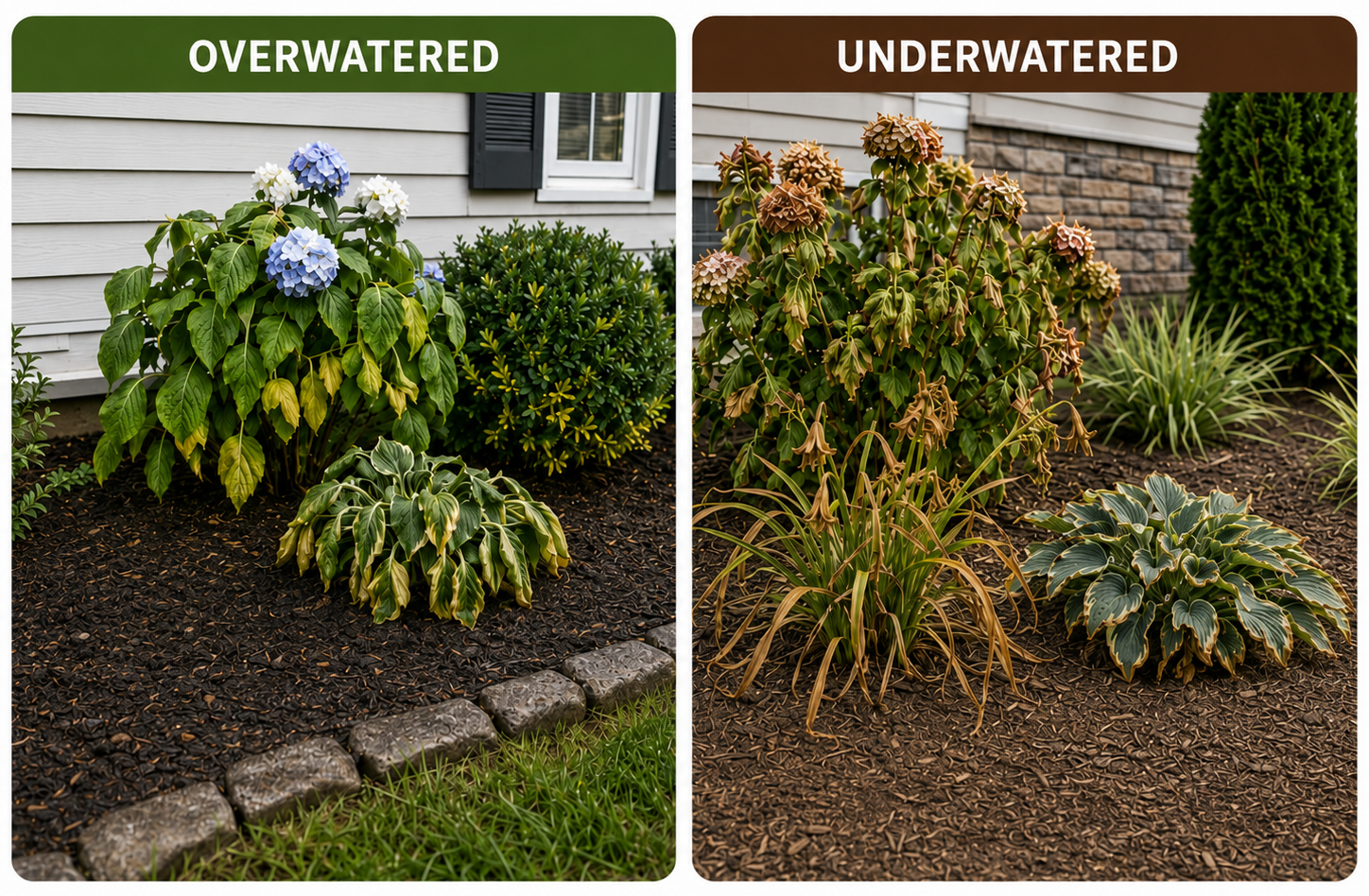
If you notice yellowing on the foliage of your plants, take a look before watering! If the foliage is limp, soft & droopy this is a sign of overwatering! If the foliage is crispy, dry & brittle, this is a sign of underwatering, so you should water again at the next available appropriate time!
Solution
While summer can be stressful on new plants and homeowners with newly installed landscapes, there are several considerations and steps to take when planning your landscape. Many of these items can be incorporated into existing landscapes, too!
Native Plantings
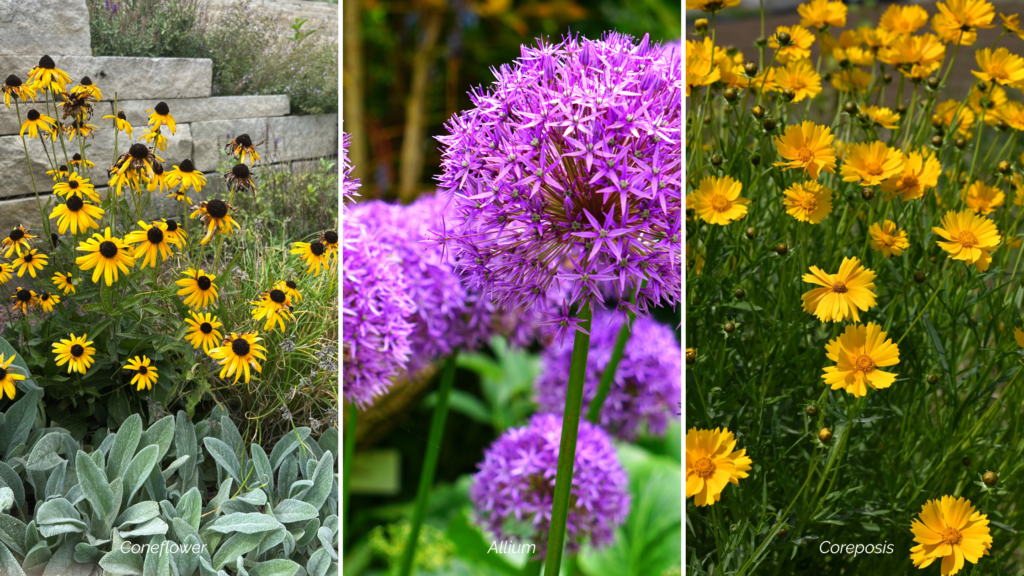
The use of native plants has many benefits, which is another great former blog topic to revisit. Beyond their pollinator-friendly nature and disease resistance, natives are perfectly acclimated to our local climate – giving your landscape an added layer of strength against the intensity of hot, dry Delaware and Pennsylvania summers. This doesn’t eliminate the need for watering, but it builds resilience into the design from day one.
And a native palette never limits your vision. The vibrancy of native perennials, the range of native shrubs and trees, and the unique textures of native grasses give our designers an extraordinary range to work with. Designed and installed professionally, a native palette can become the most striking, effortless landscape in your neighborhood – a private paradise that looks refined in every season while asking less of you to maintain it.
Incorporating Trees
Including trees in your landscape design is not only a great way to provide height, dimension and additional structure to your landscape, while these are all great benefits. The key aspect here is that large trees can provide full or filtered shade to the shrubs and perennial plants below them. This can make all the difference when that summer heat rolls around. Placing these trees in a manner that compliments the landscape, provides privacy and shelters the surrounding plants at the right time is a huge benefit! Our designers will always survey the sun during consultations to see where the exposure is the strongest and ensure trees are spaced at the right spot to filter the landscape.
While trees do require the most amount of water up front, they are usually more mature than shrubs and perennials leading to a quicker establishment process. The upfront time spent watering and investment into the trees can pay dividends for the long term appearance and longevity of the landscape!
Drip Irrigation
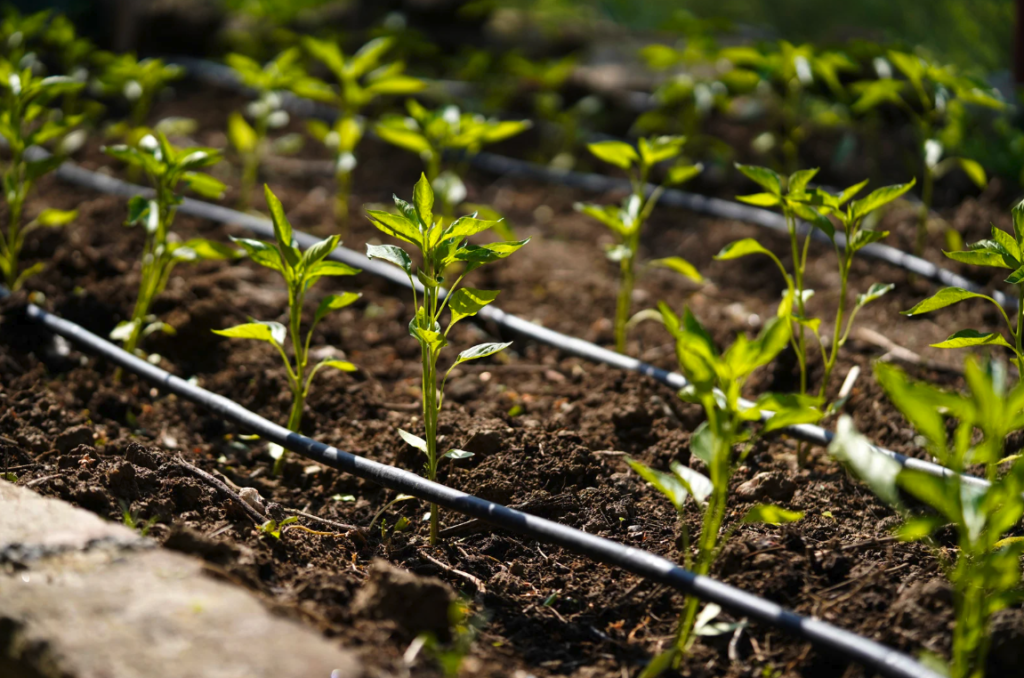
For homeowners investing in a landscape meant to be enjoyed for years, drip irrigation is one of the most elegant ways to protect that investment. It can be integrated into an existing landscape or built into a new design from the start, with small tubing looped discreetly around trees and shrubs before mulching – completely out of sight. Controlled by a timer or an app, watering becomes effortless. Premium systems even adjust automatically, increasing water during extreme heat and scaling back or pausing during rain and cooler temperatures.
Drip irrigation doesn’t replace the deep hand-watering a new landscape needs in its first few weeks, but as your plants mature it removes the daily guesswork – delivering the consistent, resort-quality care that keeps a private-paradise landscape looking its best with virtually no effort on your part.
With the right planning, care and maintenance your landscape will thrive even in the hottest of Delaware & Pennsylvania summers! Educating our clients of the best practices, available techniques and tricks is our goal. We take immense pride in installing and maintaining fine landscapes throughout the area and strive to provide the tools and expertise to keep them looking breathtaking!
FAQs
Your questions, answered.
How often should I water new plants in the summer
Water new plants deeply every other day for the first 2–3 weeks after installation, then on an as-needed basis. Deep, every-other-day watering encourages roots to grow downward in search of moisture, while daily short spurts keep roots shallow and vulnerable to summer heat.
Can I water my new plants in the evening?
Water in the early morning or a few hours before sundown - never in peak heat or late at night. Peak-heat watering evaporates before it hydrates the plant, and watering too late at night encourages insects, mildew, and fungus.
How do I know if my plants need water?
Pull back the mulch near the base of the plant and stick your finger in the soil. If it feels damp or moist, you don't need to water. If it feels dry, water at the next appropriate time - early morning or a few hours before sundown.
What's the difference between overwatered and underwaters plants?
Check the foliage before watering. Limp, soft, and droopy foliage is a sign of overwatering. Crispy, dry, and brittle foliage is a sign of underwatering - in that case, water again at the next appropriate time.
How much water does a newly planted tree need?
Larger trees are equipped with 15-gallon watering bags that should be filled every other day for the first 2–3 weeks, then as needed. Trees require more water than shrubs and perennials while establishing, but they typically establish faster because they're more mature at installation.
Should I remove tree watering bags in the winter?
Yes. Tree watering bags should be removed before winter to protect the tree and the bag through the cold season.
Do native plants need less watering?
Native plants are acclimated to the local Delaware and Pennsylvania climate, giving them added resilience against hot, dry summers. They still require proper watering while establishing, but they build strength and drought tolerance into your landscape from the start.

Testimonials
-
Arborvine just completed a hardscaping project at my home that involved the installation of a new brick walkway and lighted pillars. The owner, Greg, was very responsive and easy to work with. His crew was excellent — hardworking, detailed and collaborative. Everyone at Arborvine wanted to make sure we were happy. We are thrilled with the result and have received so many compliments from our neighbors.
Kate SullivanGreenville, DE -
Everything was done quickly and efficiently. They make sure that you are kept aware throughout the process.
Quideya ColemanBoothwyn PA -
Arborvine provided professional service and was prompt and courteous. Greg communicated thoughtfully and timely. I recommend Arborvine to all looking for high-quality landscaping.
Aaron and Stephanie DallaireWilmington, DE -
Greg and his crew did an amazing job in our backyard today. They pulled out some dead bushes, relocated other bushes, and cleaned up all my flower beds. Added sod and shrunk some beds to lessen my weeding. I will be having him back for more work and highly recommend Arborvine Landscaping to everyone.
Diane PhillipsHockessin, DE -
From my initial meeting with Greg, it was always a very efficient process which took much of the stress of home projects off my shoulders. Greg and his entire crew were always punctual, professional, and truly a pleasure to work with. I would recommend to anyone in need of home improvements in many different areas including but not limited to hardscaping, landscaping, drainage issues, and so much more. They do a great job and take immense pride in customer satisfaction!
Sarah RyanWilmington, DE -
Arborvine did a great job for us both with yard grading and installing new shrubbery. When we had a problem with one of the trees, they came back to install stakes to help and when one arbor vitae died, our warranty kicked in and they replaced that tree for us. They are professional, responsive and a pleasure to work with. They also have a great newsletter. I highly recommend!
Wendy Turner,Wilmington, DE -
We called Arborvine to help us with a drainage issue in our yard. The entire experience from beginning to end was reat. We received, in my opinion, a fair estimate. From there, the project went smoothly. Greg and Peter were great and his team was outstanding. They arrived on time, focused on the project, worked all day, and paid attention to detail. The crew was friendly, courteous, and professional. Our yard looks great, even better than before, and the water problem seems to have been resolved. The cleanup was outstanding. They will be our first choice when we need landscaping in the future.
M. Jean ChamishWilmington, DE -
Greg and his team were a pleasure to work with. They were always extremely responsive and though weather and supply issues prolonged the overall project timeline, there was constant communication and they were committed to ensuring everything was installed properly and efficiently.
Nathan & Kelly BachmanNewark, DE -
Arborvine Landscaping has done an excellent job each Spring getting our gardens back into shape after the harsh winters. Cleaning the debris, cutting back the plants properly, mulching and cutting the beds — all done well. They have honored their warranty on plants multiple times by replacing a couple of cultivars that did not make it. We have also had Arborvine aerate and seed the lawn — also done well. Greg Chakar has always responded in a timely manner to any question that has been asked.
Jim DavisWilmington, DE -
Great to work with and really captured the look we wanted. Reliable and always available for questions. Along with landscaping they installed pathway lighting and they did a great job.
Carol AruffoChadds Ford, PA